
Evidence is one of the most important parts of any personal injury case. Whether an injury occurs because of a car accident, motorcycle crash, slip and fall, defective product, or another type of incident, the available evidence can influence how responsibility is determined and how damages are evaluated.
Strong evidence helps establish what happened, who may be responsible, and how an injury has affected a person’s life. Without proper documentation, even valid claims may become more difficult to prove.
Why Evidence Matters in Personal Injury Claims
Personal injury cases generally require proof that another party’s actions or negligence contributed to the injury. Evidence helps connect the accident to the injuries and supports the damages being requested.
Insurance companies, attorneys, and courts rely on evidence to understand the circumstances surrounding an accident. The more complete and reliable the evidence, the clearer the facts of the case may become.
Evidence may help answer important questions such as:
- How did the accident happen?
- Who was responsible?
- Were safety rules or laws violated?
- How serious are the injuries?
- What financial losses resulted from the accident?
Types of Evidence Used in Personal Injury Cases
Different types of evidence may be important depending on the circumstances of an injury claim. A successful case often involves gathering multiple forms of documentation.
Accident Reports and Official Records
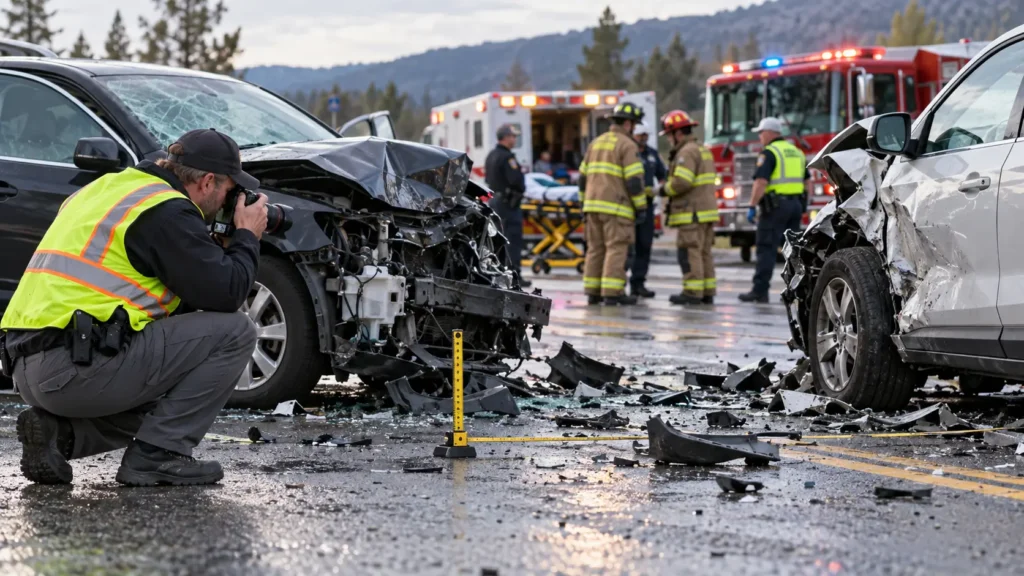
Police reports, incident reports, and other official records can provide important information about an accident. These documents may include statements from involved parties, observations from responding officers, and details about the location and circumstances.
For example, a police report after a vehicle collision may document road conditions, vehicle damage, and statements from drivers or witnesses.
The National Highway Traffic Safety Administration provides safety information and crash-related resources that explain the importance of documenting vehicle accidents.
Photographs and Videos
Photos and videos can provide visual proof of what occurred. Images taken immediately after an accident may show vehicle damage, hazardous conditions, injuries, property damage, and other important details.
Surveillance footage, traffic cameras, and smartphone recordings may also provide valuable information about how an accident occurred.
In modern injury cases, digital evidence has become increasingly important. You can also learn more about technology-based evidence in our article: AI Dash Cams and Accident Reconstruction in Personal Injury Claims.
The Importance of Medical Evidence
Medical records are essential in personal injury cases because they document the connection between an accident and the injuries suffered.
Medical evidence may include:
- Emergency room records
- Doctor evaluations
- Diagnostic tests
- Treatment plans
- Physical therapy records
- Medical bills
Consistent medical documentation can help demonstrate the severity of injuries and the treatment required for recovery.
For more information about medical documentation, read: The Importance of Medical Documentation in Injury Claims.
Witness Statements and Testimony
People who witnessed an accident may provide valuable information about what happened. Witness statements can support a victim’s version of events and provide details that may not appear in official reports.
Witnesses may describe:
- Driver behavior before a crash
- Unsafe conditions that caused a fall
- Actions taken immediately after an accident
- Statements made by involved parties
However, witness memories can change over time, which is why collecting statements as soon as possible can be important.
Digital Evidence in Modern Injury Cases
Technology has changed how personal injury cases are investigated. Digital evidence can now provide detailed information about accidents and injuries.
Examples of digital evidence include:
- Dash camera footage
- Vehicle event data recorder information
- Smartphone location data
- Social media activity
- Security camera recordings
- Wearable device information
Digital evidence may help explain events that are difficult to prove through traditional records alone.
You can also read about emerging technology in injury claims in our article: Wearable Technology Injury Evidence.
Expert Witness Evidence
Some personal injury cases require expert analysis. Experts may provide opinions about medical conditions, accident reconstruction, engineering issues, or financial losses.
Examples include:
- Medical experts explaining injuries
- Accident reconstruction specialists analyzing crashes
- Engineering experts reviewing product defects
- Economic experts calculating financial damages
Expert testimony can help explain complex information to insurance companies, judges, and juries.
How Evidence Affects Settlement Negotiations
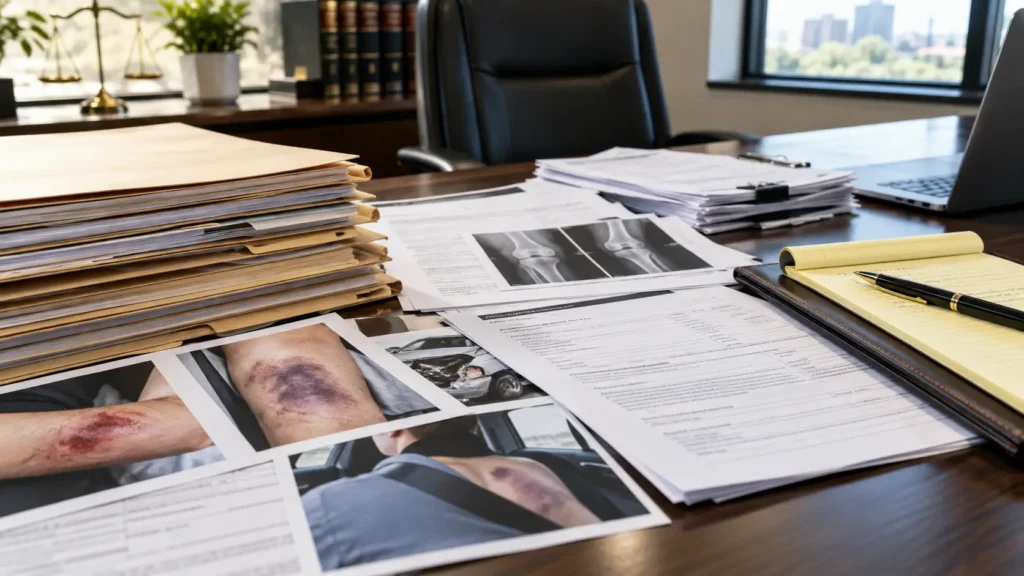
Evidence often plays a major role during settlement discussions. Insurance companies evaluate claims based on available proof, including liability evidence, medical records, and documented losses.
Strong evidence may help demonstrate the value of a claim and encourage fair negotiations.
However, incomplete or inconsistent evidence may create challenges during the claims process.
Preserving Evidence After an Accident
Evidence can disappear over time. Photos may be lost, surveillance footage may be deleted, and accident scenes may change.
Important steps after an accident may include:
- Taking photographs of the scene
- Saving medical documents
- Collecting witness information
- Keeping accident-related expenses
- Preserving digital records
Additional Evidence Resources
- Justia Personal Injury Resources
- Nolo Personal Injury Law Guide
- Cornell Legal Information Institute
- CDC Injury Prevention Resources
- Insurance Institute for Highway Safety
Conclusion
Evidence is the foundation of a personal injury case. Accident reports, photographs, medical records, witness statements, and digital information can all help establish what happened and support a claim for damages.
Because every accident is different, understanding what evidence matters and preserving important information early can make a significant difference in the outcome of a case.
Call (888) 488-1391 or complete the “Do I Have A Case?” form to schedule a free initial consultation.