
Artificial intelligence is transforming how car accidents are analyzed and proven in personal injury claims. One of the most important developments in 2026 is the rise of AI-powered dash cams and automated accident reconstruction tools. These systems are changing how fault is determined, how evidence is reviewed, and how insurance companies evaluate claims.
What Are AI Dash Cams?
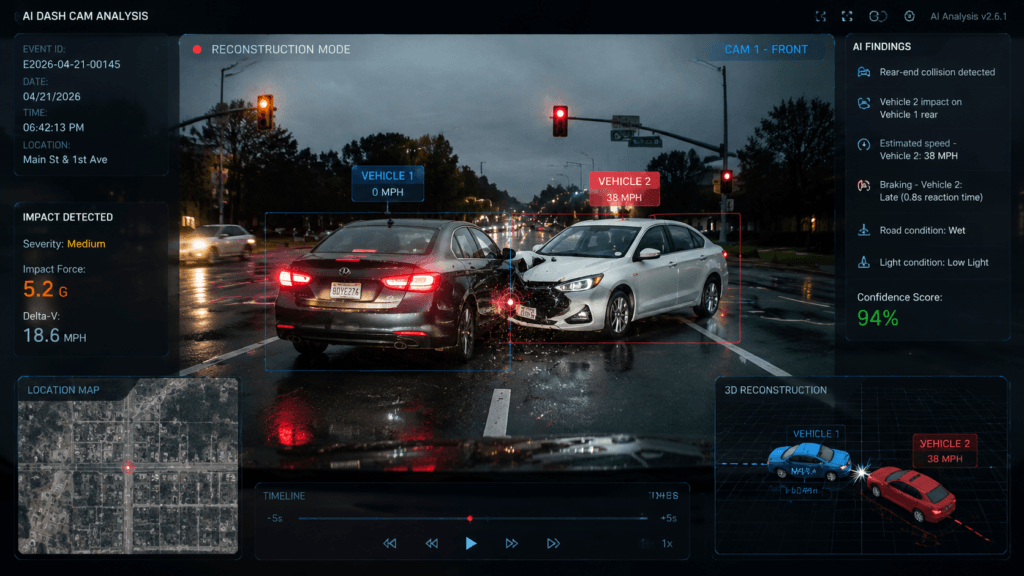
AI dash cams are advanced vehicle recording devices that do more than capture video. Unlike traditional dash cams, these systems analyze driving behavior, detect collisions, and automatically generate accident reports.
Popular systems include Tesla’s built-in cameras, Nexar AI dash cams, Ring Car Cam, and Garmin Dash Cam systems. These devices use artificial intelligence to interpret road conditions, speed, braking patterns, and impact events.
This data is increasingly being used in personal injury cases as objective evidence of how an accident occurred.
How AI Accident Reconstruction Works
AI reconstruction tools analyze multiple data points from a crash, including:
- Vehicle speed before impact
- Braking and acceleration patterns
- Distance between vehicles
- Traffic signal status
- Road conditions and weather data
Using this information, AI systems create a digital reconstruction of the accident. This helps lawyers, insurance companies, and courts understand exactly what happened in seconds before and after a collision.
Why AI Dash Cam Evidence Matters in Injury Claims
In personal injury cases, evidence is everything. AI dash cam footage can provide clear, objective proof of fault, which can significantly impact the outcome of a claim.
Unlike witness statements, which may be inconsistent, AI-generated data is based on real-time sensor input and video analysis.
This can help establish:
- Who caused the accident
- Whether a driver was speeding or distracted
- If traffic laws were violated
- The severity of impact
For related legal principles, see our guide on medical documentation in injury claims.
How Insurance Companies Use AI Evidence
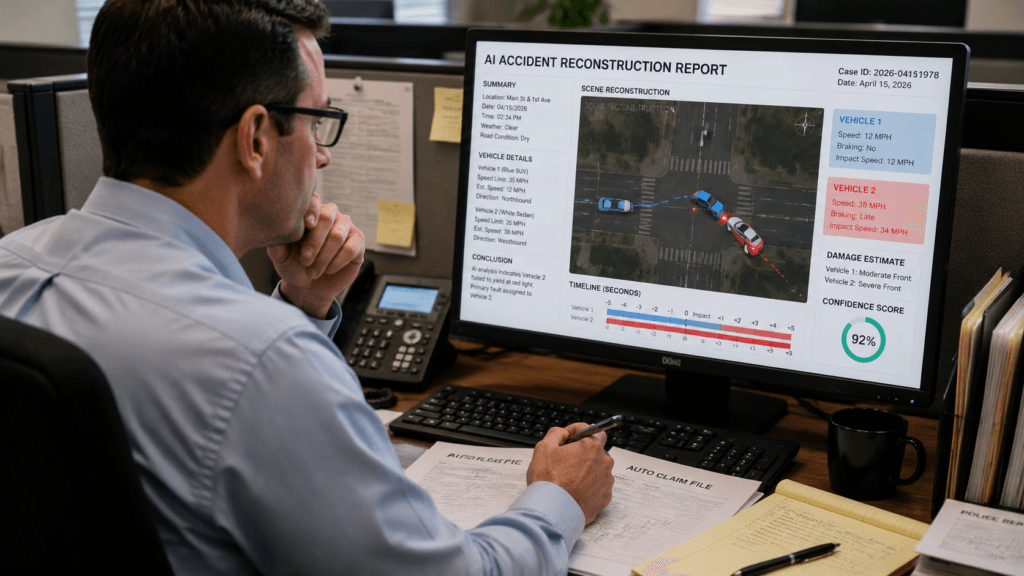
Insurance companies are increasingly adopting AI tools to evaluate accident claims. They may use dash cam footage combined with algorithms to estimate fault percentages and repair costs.
In some cases, insurers may attempt to use AI analysis to reduce payout amounts by arguing shared fault.
This makes it even more important for injured victims to understand how this technology works and how it may affect their claim.
Real-World Example of AI Dash Cam Use
Consider a rear-end collision at an intersection. A traditional claim might rely on witness statements and police reports. However, an AI dash cam can show:
- The exact speed of both vehicles
- Whether the rear driver was distracted
- Brake timing before impact
- Traffic light status at the moment of collision
This level of detail can significantly strengthen a personal injury case.
Legal Challenges With AI Dash Cam Evidence
While AI evidence is powerful, it also raises legal questions.
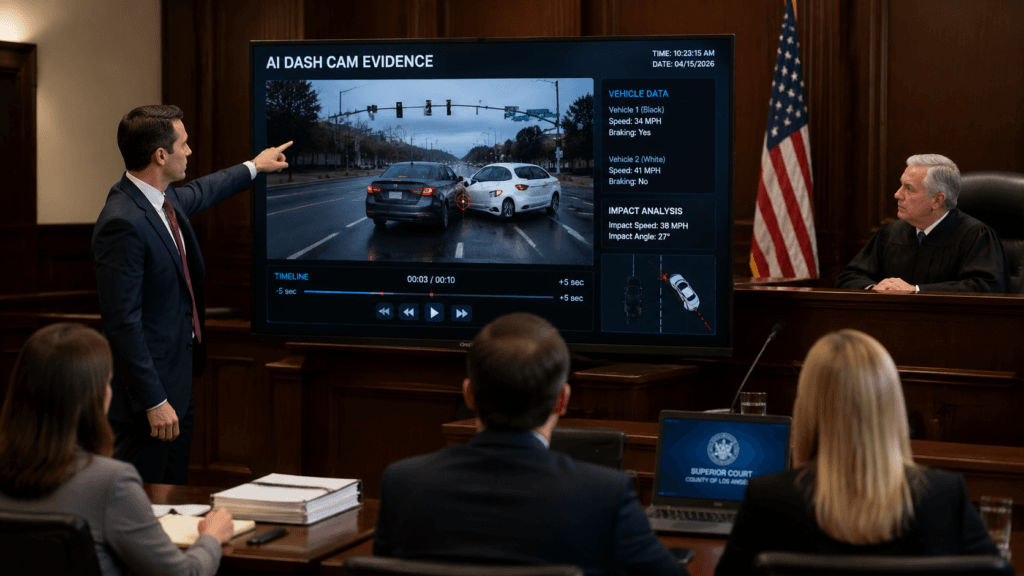
Courts must consider whether AI-generated conclusions are reliable and admissible. Attorneys may challenge how the algorithm interpreted the crash or whether the data was complete.
There are also concerns about privacy, especially when continuous vehicle monitoring is involved.
Because of these issues, AI evidence is often supported with additional proof such as medical records and eyewitness testimony.
How Attorneys Use AI Dash Cam Data
Personal injury attorneys may use AI dash cam footage to strengthen liability arguments. This can help establish fault early in negotiations and increase settlement leverage.
Lawyers may also work with accident reconstruction experts to validate AI-generated findings.
To understand how evidence fits into a broader claim strategy, you may read our article on “Personal Injury Lawsuits: A Step-by-Step Guide to the Legal Process”.
Related Technologies in Accident Cases
AI dash cams are part of a larger trend of digital evidence in personal injury law. Other technologies include:
- Vehicle black box data recorders
- Smartphone GPS tracking
- Traffic camera systems
- Surveillance video from nearby businesses
- Smart traffic infrastructure sensors
More information on emerging legal technology can be found at:
- National Highway Traffic Safety Administration
- U.S. Department of Transportation
- CDC Transportation Safety
- Insurance Institute for Highway Safety
- Society of Automotive Engineers
The Future of AI in Personal Injury Law
AI technology is expected to play an even larger role in accident claims in the coming years. Future systems may automatically generate full legal reports immediately after a crash occurs.
This could speed up investigations but also increase disputes over data interpretation.
As technology advances, personal injury law will continue to evolve alongside it.
Conclusion
AI dash cams and accident reconstruction tools are transforming how personal injury claims are proven and defended. They provide powerful, objective evidence but also introduce new legal challenges.
Understanding how this technology works is essential for anyone involved in a motor vehicle accident claim in 2026 and beyond.
Call (888) 488-1391 or complete the “Do I Have A Case?” form for a free consultation.